> For the complete documentation index, see [llms.txt](https://docs.bdb.ai/bdb-documentation/llms.txt). Markdown versions of documentation pages are available by appending `.md` to page URLs; this page is available as [Markdown](https://docs.bdb.ai/bdb-documentation/data-visualization/governed-dashboards/connecting-to-a-data-source/establishing-a-data-connection/csv-connection.md).
# CSV Connection
Steps to develop a data connection based on the CSV file.
{% hint style="info" %}
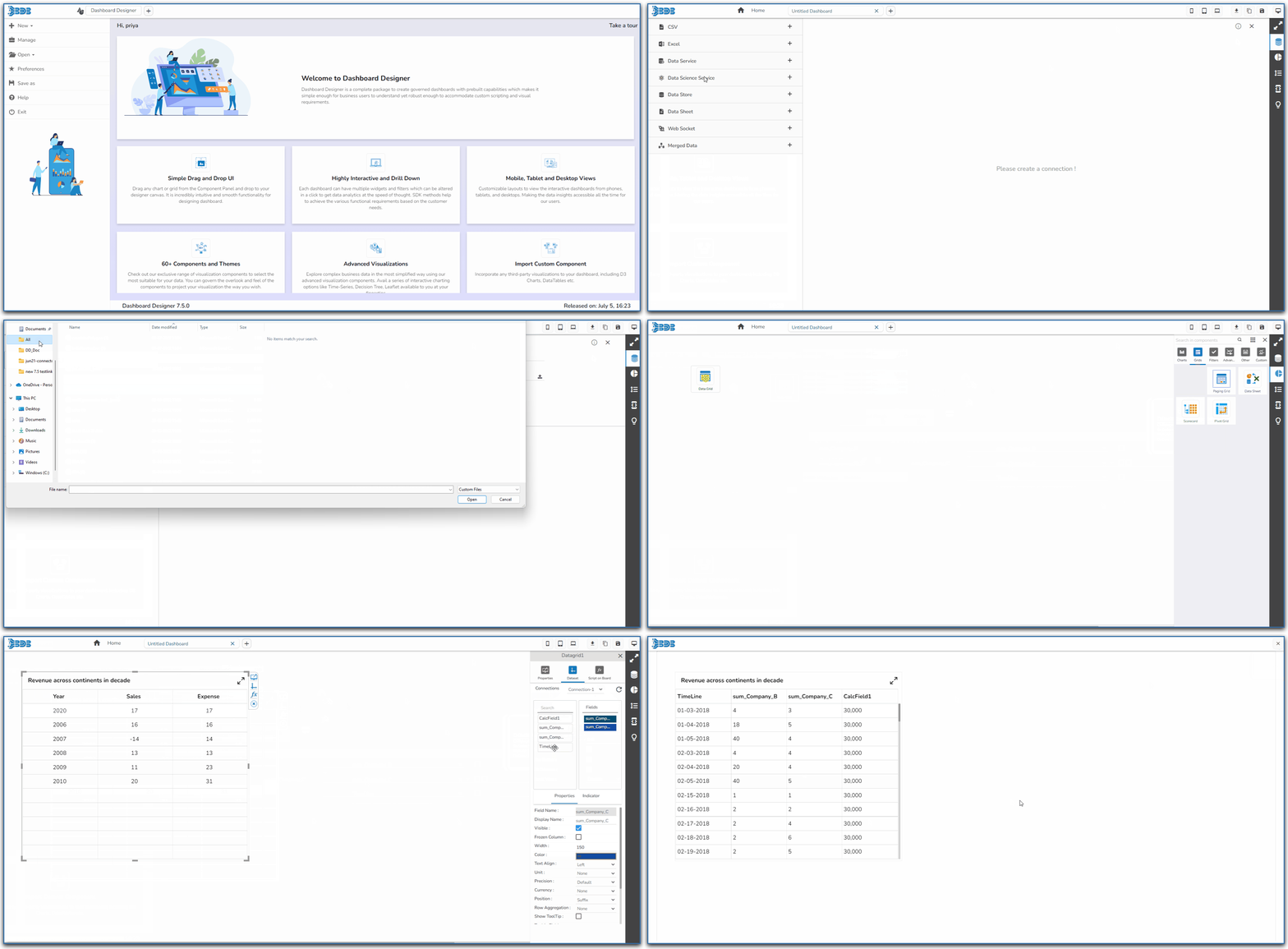
Check out the given walk-through on how to create the CSV data connection and associated it with a charting component.
{% endhint %}
Click the ***Data source*** icon provided on the right side of the canvas, and view the database connectivity options.
* Click the ***Data Connectors*** icon to display all the available data connector types.
* Click the ***Create New Connection*** icon provided next to the ***CSV*** option.
* A new connection gets added under the CSV connection type.
* Click the connection to display the connection-specific details.

* Configure the following information:
* **Name:** Name the connection.
* **Browse:** Click the ***Browse*** icon to browse a CSV file.
* **Load at Start:** Enable this option to get the updated data from the data source before loading it into charts.
* The ***Field Set*** tab displays all the fields after establishing the data connection.

### Condition
* Select the ***Condition*** tab.
* Provide a condition to be applied as a filter on the selected data by putting a checkmark in the given box.
* **E.g.,** As displayed in the following image, specific date has been provided under the Conditions column for the Timeline so, data for the given date will be taken.

### Calculated Field
The users can add a calculated field by using this tab.
* Navigate to the Data Connectors page.
* Create a connection by selecting a specific Data Connector type.
* Connect to the desired data source to access the available fields.
* Click the ***Calculated Fields*** tab.
* The ***Calculated Field Editor*** dialog box opens.
* **Name:** Provide a name for the calculated field
* **Script Editor**: Use the Script Editor space to insert the desired calculation formula using the rule given below.
* Click the ***Create*** option to create the calculated field.

{% hint style="info" %} Please Note:
* Enclose field names in square brackets: \[total\_sales]/\[number\_of\_items]
* Enclose global variable in curly braces: {bar1.profit}\*2+\[profit\_jan]
{% endhint %}
* The newly created calculated field gets added under the ***Calculated Fields*** tab.

### Script on Load for a Data Connection
The users can apply their modifications or preferences at the connection level using the Scripting window to get the modified data.
* Navigate to the Data Connectors page.
* Select a Data Connector type.
* Create a new Connection and configure it.
* Select the ***Script on Load*** icon provided next to the connection.

* The ***Script*** tab appears to trigger a script to produce some action on the data connection.

* The user can also use a script for the Dashboard, which can be accessed via the **Components** tab.

* The user can search the script for the Dashboard, which can be accessed via the ***Script*** tab.

Please Note:
* Click the ***Help*** icon from the Script on the Load page.

* The ***Scripting Help*** tab opens with some predefined scripts.

* Click the ***Advanced Scripting*** option to display the chart-wise advanced scripts.